
The Miami Hoodies
Just after “the Million Hoodie March”, Lebron James used his Twitter platform to show support and solidarity with the protesters and Trayvon Martin’s family. To this day, Lebron James has 41.5 million followers on Twitter. His post was retweeted almost 11,500 times, with over 580 comments and 1450 likes.
"I Can't Breathe"
The Cavaliers and Nets used their platform to show their support and help with the mobilization.
All Sports Protests
Sports protests raise awareness and invite spectators and fans to become engaged and speak up. Most sports protests are organized to defend equal rights for all, especially people of color who have been unequally treated for centuries in the United States.
Athletes use the media to communicate their engagement or campaign. Since they are followed by journalists, fans and other athletes, they are able to take advantage of their platform of supporters to get others interested in the protest, get engaged or simply educate others on societal issues.
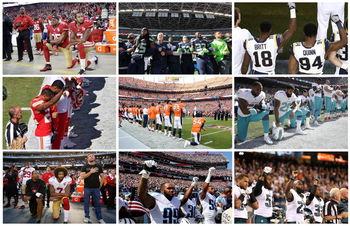
The athletes inspire other protests across different professional teams and players, as well as online mobilization across media platforms, particularly social media. Colin Kaepernick's protest inspired dozens of other professional football players on other teams across the country to raise their voices against racism and discrimination in the United States. Athletes have the power to create new spaces of engagement and do not always take advantage of their following and platform to raise key societal issues, like that of equal pay for women. Most sports protests were organized by male players in response to current societal problems, deaths, or movements that arose beforehand. Their point is to get people engaged and aware of certain issues, be it race, religion, gender, social class or previous activism or engagement.